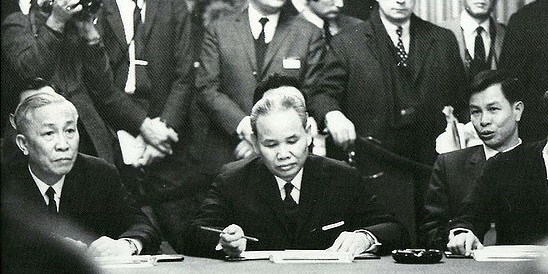
Barbara F. Walter (2015) states that, with the exception of the recent civil war in Libya, every civil war that has started since 2006 has actually been a continuation of a previous war. Thus it is imperative to understand the conditions under which civil wars resume, especially since they may be different than the conditions that contribute to their onset. In a recent study, Walter poses that since repeat civil wars are almost always conflicts in which military defeat or suppression prove to be unfeasible, it is vital that negotiation, settlement, and reform are attractive options for both parties. This is why government accountability is important. Walter hypothesizes that checks on executive power and the existence of a written constitution may make it less likely for a leader to unilaterally back out on following through with a reform. Similarly, when there is an engaged voting public, genuine political competition, and a free media, the public can hold government leaders accountable for their promises. She cautions that these conditions may not be as relevant when rebel groups, the general public, or a powerful third party have no interest in compromise.
To test this, the author examines incidents of intra-state conflict between 1945 and 2009 to find what characteristics of governance are associated with lasting peace following civil war. She measured indicators of the rule of law, civil liberties, press freedom, and political participation, as well as other factors commonly associated with conflict. The study finds that repeat civil wars are dramatically less likely to occur when countries’ governments have written constitutions and when leaders are held accountable through political participation. The importance of a free press, however, is not supported in this study.
Although civil war recurrence has a multitude of causes, good governance that provides accountability is protective against recurring civil conflicts. More research is still needed on the exact mechanisms by which this functions. The author states that while grievances related to economic development may be related to the onset of civil war, addressing issues of governance may be a more important long-term investment for preventing war recurrence.
Walter, Barbara F. (2015). Why bad governance leads to repeat civil war. Journal of Conflict Resolution. 59 (7), 1242-1272.
Photo Credit: Manh Hai